
Course Preview
- Duration
- 6h 23m
- Difficulty
- Professional
- Instructor
- Keith Bogart
- Videos
- 12
- Quizzes
- 8
- Labs
- 2
- CPE Credits
- 8
- Published
- Jun 15, 2015
- Updated
- Jun 12, 2025
Rapid Spanning-Tree and MST
This course provides a detailed and practical understanding of Rapid Spanning Tree Protocol, commonly known as RSTP, and Multiple Spanning Tree, commonly known as MST. It is designed for learners who want to build strong knowledge of modern Spanning Tree technologies used to prevent Layer 2 loops, improve convergence, and support scalable switching designs. The course begins with an in-depth explanation of IEEE 802.1w, focusing on how RSTP improves upon the original 802.1D Spanning Tree Protocol. Learners will explore the mechanisms that make RSTP faster, including its BPDU format, port roles, port states, synchronization process, and improved convergence behavior. The course also covers 802.1t path cost values and explains how RSTP handles topology changes within a switched network. After building a strong foundation in RSTP, the course moves into IEEE 802.1s Multiple Spanning Tree. You will learn how MST allows multiple VLANs to be mapped to spanning tree instances, helping networks achieve better traffic load balancing compared to traditional PVST designs. The training also explains how to configure MST and understand how MST regions operate. In addition, learners will study how to predict Spanning Tree port states on the MST Virtual Bridge and how MST interacts with PVST environments. The course also covers troubleshooting techniques for PVST simulation failures, helping learners identify and resolve compatibility and design issues in real-world switching networks. By the end of this course, learners will have a strong understanding of RSTP and MST operation, configuration, verification, and troubleshooting, along with the practical knowledge needed to apply these technologies in enterprise switching environments.
Instructor
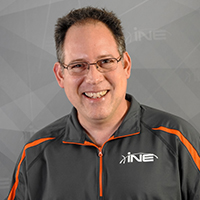
Keith Bogart
Course Instructor
Keith started his networking career as customer service representative at Cisco Systems in 1996. His desire to learn more soon led him to a position as a Cisco Technical Assistance Center (TAC) engineer on the “Dial-Access” team, and within six months he had obtained his Dial-ISP CCIE. He later became a network consulting engineer and obtained his CCNA certification while teaching the technologies to Cisco employees during his lunch breaks. Keith was the first instructor on Cisco’s TAC Training team, where he taught a wide range of internetworking topics and later developed and taught other courses such as routing protocols, LAN switching, MPLS, 802.1x, and CCNA. After almost 17 years with Cisco, Keith joined a small startup and focused on 802.11 Wi-Fi technologies, during which time he obtained his CWNA certification. He is now very happy to be working as an instructor for Routing & Switching. Keith lives in Raleigh, North Carolina, with his wife, son, and daughter. When he is not teaching Bootcamps, Keith can be found at home with his family, reading, or working in the yard.
What Is Included
Skill Coverage
Course Curriculum
Topic
12 videos • 2 labs • 8 quizs