Cybersecurity Awareness Programs for Organizations 2026

- Published:
- Last Updated:
Cybersecurity awareness programs help organizations educate their teams to recognize and prevent digital threats like phishing, ransomware, and social engineering. In 2026, continuous, realistic, role-tailored programs are essential to reduce human risk, strengthen security culture, and comply with regulatory expectations while enhancing overall resilience.
Key Entities You Should Know
| Entity | Simple Definition |
|---|---|
| Cybersecurity Awareness Program | A structured initiative that teaches teams how to recognize, resist, and respond to cyber threats. |
| Phishing | Deceptive attempts, often via email, to steal credentials or deliver malware. |
| Social Engineering | Psychological manipulation used to trick people into divulging confidential information. |
| Ransomware | Malware that encrypts data and demands payment for its return. |
| Human Risk | Threats created by individuals’ actions, like clicking malicious links or poor data handling. |
What Are Cybersecurity Awareness Programs?
Cybersecurity awareness programs are organized initiatives that help teams identify, prevent, and respond to cyber threats such as phishing, social engineering, and malware, using structured lessons and simulations to build secure behavior over time.
These programs go beyond technical defenses and focus on human risk, the leading cause of security incidents and breaches.
Program Elements Include:
- Interactive modules on modern threats
- Phishing simulations covering email, SMS, and voice attacks
- Install safe digital habits like MFA and password hygiene
- Realistic scenario‑based exercises
- Reporting and behavior tracking
Programs that blend education with measurable behavior outcomes are far more effective than one‑off, compliance-only courses.
Why Are Cybersecurity Awareness Programs Essential in 2026?
Organizations need effective cybersecurity awareness programs in 2026 because attackers use AI and multi‑channel social engineering tactics that traditional security tools alone cannot block.
Key Reasons & What to Anticipate Next:
| Reason | Impact on Organizations |
|---|---|
| AI‑enhanced phishing | Threats become more believable and harder to detect. |
| Regulatory expectations | Compliance frameworks increasingly require documented training. |
| Human risk remains dominant | Risk from user decisions often exceeds technical vulnerabilities. |
| Behavior change over checkbox training | Programs must drive real, measurable habits. |
How to Build Effective Cybersecurity Awareness Programs
Designing effective programs involves assessing risk, tailoring training content, combining interactive components with simulated threats, and continuously measuring performance and improvement.
Steps to Build a Program:
- Perform a risk assessment to identify threat exposure
- Use role‑specific scenarios rather than generic content
- Schedule micro-learning modules and phishing simulations
- Reinforce lessons with reminders and quick assessments
- Measure behavior outcomes - not just completion rates
- Update curriculum as threats evolve
Common Challenges and How to Overcome Them
Even the best programs can face obstacles. Address these proactively:
- Low Engagement: Use gamified content, role-specific scenarios, and micro-learning modules.
- Training Fatigue: Keep sessions short, interactive, and relevant.
- Keeping Content Current: Regularly update modules for emerging threats like AI-powered phishing.
- Measuring Human Risk: Combine behavior tracking with real-world simulations.
Future Trends in Cybersecurity Awareness
Key trends to watch in 2026:
- AI-driven simulations to mimic real-world attacks
- Personalized learning paths for different roles and departments
- Increased regulatory expectations requiring proof of training
- Continuous learning loops integrated with daily work tools
- Integration with overall cybersecurity frameworks and risk management
Conclusion
Effective cybersecurity awareness programs in 2026 are no longer optional - they are critical to reducing human risk, complying with regulations, and creating a security-conscious culture. Organizations that invest in continuous, realistic, and role-tailored programs equip employees to detect threats, respond correctly, and contribute to overall resilience.
To take your learning to the next level, explore our diverse selection of courses designed to help you grow professionally. Visit our Courses page to find the perfect course for your needs.
Start your journey today with SecuRetain, where we support your path to success.
FAQs
A structured initiative to educate teams on recognizing, preventing, and responding to cyber threats.
Continuous programs are ideal, with ongoing micro-learning, periodic simulations, and updates for emerging threats.
Phishing, ransomware, social engineering, insider threats, and human error are key focus areas.
Through simulated attack results, behavior changes, incident reduction, and employee feedback.
Yes, role-specific content ensures employees receive relevant, practical scenarios aligned with their responsibilities.
Build awareness into everyday security behavior
Explore cybersecurity and awareness training that helps teams recognize threats, report incidents, and strengthen organizational resilience.
Related reads
Keep exploring
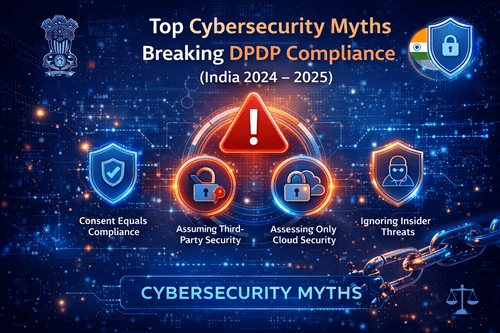 DPDP
DPDPBust top cybersecurity myths blocking DPDP compliance for Indian businesses. 2024-2025 guide covers data privacy gaps, audit failures & fixes amid enforcement—essential for...
 Ethical Hacking
Ethical hacking is the authorized practice of testing systems, networks, applications, and security processes to find weaknesses before attackers exploit them.
 DPDP
DPDPUnderstand India's Personal Data Protection Act, including its scope, key terms, business duties, individual rights, enforcement, penalties, and practical DPDP compliance steps.