Ethical Hacking Roadmap Step by Step: Key Skills and Specializations

- Published:
- Last Updated:
Ethical hacking roadmap step by step provides a clear learning path for beginners to build technical skills, practice safely, specialize, and prepare for cybersecurity roles. Following this roadmap ensures foundational knowledge, practical experience, and professional readiness, helping learners transition into ethical hacking confidently.
What Does an Ethical Hacker Do and Why Is It Important?
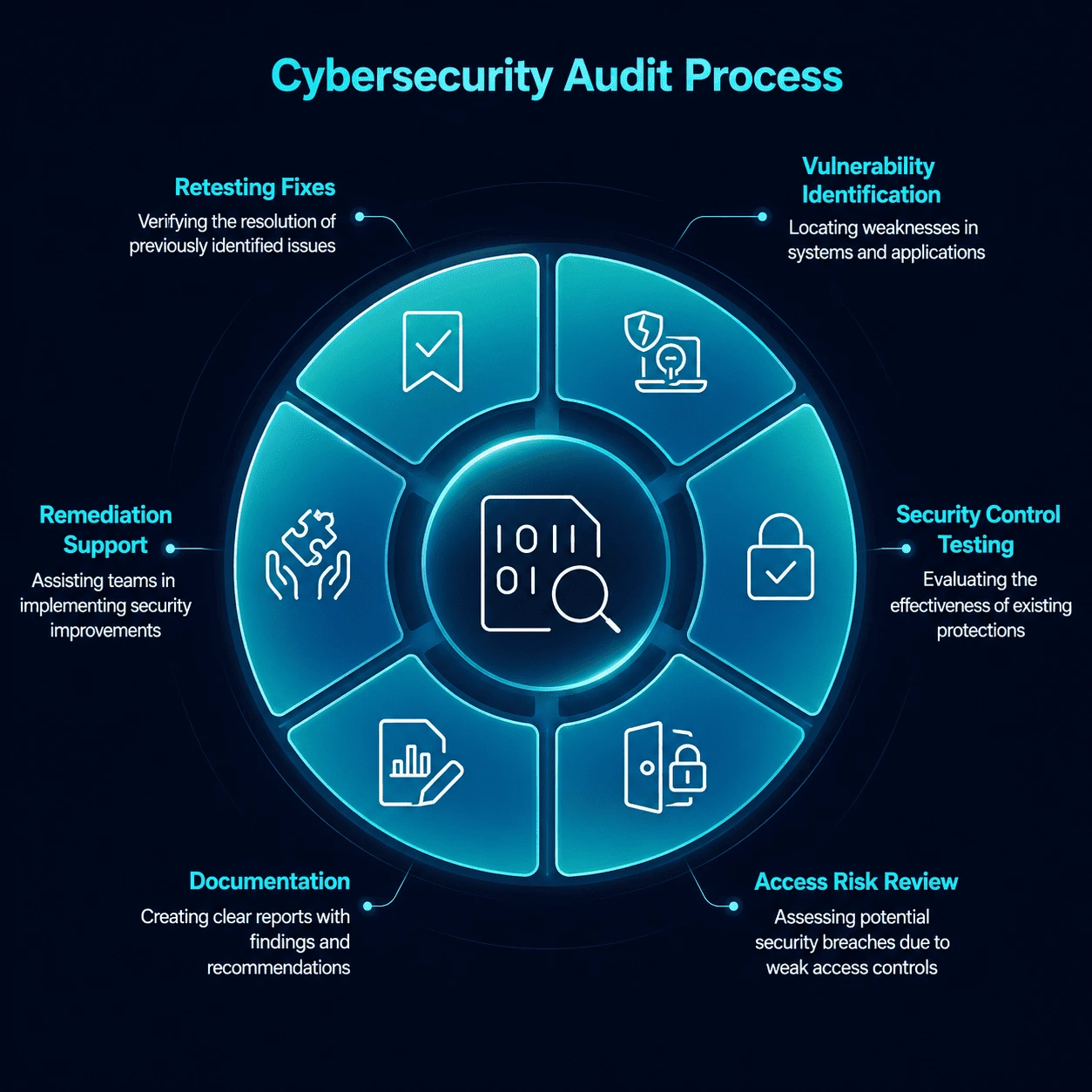
An ethical hacker is an authorized cybersecurity professional who tests systems to find weaknesses before attackers can misuse them. The role is focused on prevention, risk reduction, and helping organizations improve security.
Ethical hackers usually work on:
- Finding vulnerabilities: Identifying weaknesses in applications, systems, networks, or configurations.
- Testing security controls: Checking whether existing protections are working as expected.
- Reviewing access risks: Looking for weak passwords, excessive permissions, or poor authentication practices.
- Documenting findings: Writing clear reports with evidence, risk level, and recommended fixes.
- Supporting remediation: Helping teams understand what needs to be corrected or improved.
- Retesting fixes: Verifying whether previously reported issues have been resolved properly.
The value of an ethical hacker is not only in finding security gaps but also in explaining them clearly enough for teams to take action.
How Can Beginners Identify Their Starting Point in an Ethical Hacking Career?
Beginners should first assess technical knowledge and comfort with computing environments to determine where to start on the ethical hacking roadmap step by step.
A beginner should first assess:
- Networking knowledge: Understanding IP addresses, ports, DNS, HTTP, and firewalls.
- Operating system basics: Learning how Linux and Windows systems work.
- Web fundamentals: Understanding websites, servers, browsers, APIs, and databases.
- Security awareness: Knowing common threats, weak configurations, and risky user behavior.
- Technical confidence: Practicing commands, reading logs, and using simple tools safely.
- Learning discipline: Following a consistent roadmap instead of jumping randomly between topics.
How Can Beginners Check Their Current Level?
A simple self-check helps learners avoid wasting time on topics that are too advanced or too basic.
Beginners can ask:
- Can basic networking terms be explained clearly?
- Is Linux command-line usage comfortable?
- Are websites and login systems understood at a basic level?
- Can common cyber risks be described in simple words?
- Is there experience with any coding or scripting language (Python, Bash, JavaScript)?
- Has any legal cybersecurity lab or course been completed?
Most beginners struggle because they start with tools too early; learning how systems work first makes every later step easier.
What Is the Step-by-Step Roadmap to Become an Ethical Hacker?
The roadmap starts with fundamentals, moves into safe practice, then builds toward specialization and professional readiness. Each stage should add practical knowledge without crossing legal or ethical boundaries.
Step 1: Get Your Foundations Right
- Master networking, Linux, and web basics
- Know how systems, servers, and applications communicate
Step 2: Think Like a Hacker
- Learn how attacks happen and why systems fail
- Study threats, vulnerabilities, and real-world breach scenarios
Step 3: Play in Safe Labs
- Experiment in virtual environments without risk
- Practice hacking techniques, breaking and fixing systems
Step 4: Learn the Hacker’s Toolbox
- Explore scanners, exploits, sniffers, and reporting tools
- Understand how to gather data and analyze weak points
Step 5: Prove Your Skills
- Create reports, screenshots, and demo projects
- Build a portfolio that shows employers you can deliver
Step 6: Launch Your Career
- Get certifications, internships, or bug bounty experience
- Network, apply for ethical hacking roles, and start professional projects
A strong roadmap should create understanding, not just tool familiarity; employers value learners who can explain risk, not only run scans.
Which Specialization Paths Are Included in the Ethical Hacking Roadmap
Specialization allows learners to focus on areas aligned with interests and career goals.
Most demanding specialization paths are:
- Web Application Security: Focuses on websites, APIs, and input validation.
- Network Security Testing: Analyzes servers, firewalls, and network exposure.
- Cloud Security: Tests cloud configurations, access controls, and data storage.
- Mobile Security: Assesses mobile apps, APIs, and authentication flows.
- Red Team Operations: Simulates real-world attack scenarios to test defenses.
- Security Analysis: Focuses on monitoring, threat detection, and mitigation.
Beginners can start broad, then narrow into a specialization after gaining fundamentals.
Why Is a Career in Ethical Hacking Attractive to Professionals?
Ethical hacking careers combine problem-solving, technical skill, and high demand in the cybersecurity industry.
Attractive aspects include:
- High demand: Continuous need for cybersecurity professionals ensures job stability.
- Competitive salaries: Specialized skills command above-average compensation.
- Hands-on problem-solving: Work involves real-world system testing and remediation.
- Career flexibility: Skills are transferable across testing, consulting, and risk roles.
- Professional recognition: Certifications and experience build credibility in the cybersecurity community.
- Real-world impact: Ethical hackers protect sensitive data and strengthen organizational security.
Which Programming Languages Should Be Learned in Ethical Hacking Roadmap
Programming supports automation, testing, and understanding system behavior.
Essential languages for beginners:
Bash / Linux Scripting
- Why: Most hacking happens on Linux systems; scripting helps automate tasks like scanning, enumeration, and log analysis.
- Use Cases: Writing scripts to automate network scanning, file handling, and privilege escalation.
Python
- Why: Python is versatile, beginner-friendly, and widely used in security tools.
- Use Cases: Exploit development, automating attacks, building custom scanners, creating malware analysis tools.
JavaScript
- Why: Most web vulnerabilities involve client-side code.
- Use Cases: Cross-site scripting (XSS), DOM manipulation, understanding browser security, web application testing.
SQL
- Why: Databases are common attack targets.
- Use Cases: SQL injection attacks, database enumeration, testing web apps for vulnerabilities.
PowerShell
- Why: Critical for Windows environments and internal network penetration.
- Use Cases: Privilege escalation, system enumeration, automation of internal attacks.
C / C++ (Optional Advanced)
- Why: Low-level understanding of memory, system calls, and buffer overflows.
- Use Cases: Writing exploits, reverse engineering, malware analysis.
Assembly (Optional Advanced)
- Why: Deep understanding of how programs and operating systems work.
- Use Cases: Exploit development, reverse engineering binaries, analyzing malware at the instruction level.
Focus on one language at a time and apply it in legal lab environments to strengthen understanding.
Conclusion
An ethical hacking roadmap step by step gives beginners a clear direction for entering cybersecurity without feeling lost. The journey starts with strong fundamentals, moves into safe hands-on practice, and gradually expands into specialization, reporting, certifications, and career preparation.
To take your learning to the next level, explore our diverse selection of courses designed to help you grow professionally. Visit our Courses page to find the perfect course for your needs.
Start your journey today with SecuRetain, where we support your path to success.
FAQ's
An ethical hacker tests systems to test vulnerabilities and prevent security breaches.
Focus on networking, Linux, and web fundamentals, then practice in safe lab environments.
Learn Bash, Python, JavaScript, SQL, and PowerShell, with C/C++ or Assembly for advanced work.
Master scanners, vulnerability analyzers, exploit frameworks, and automated scripts.
Build a portfolio with lab exercises, reports, demo projects, and contributions to bug bounty programs.
Follow a structured ethical hacking roadmap
Explore cybersecurity courses and learning paths that help beginners build fundamentals, practice safely, and prepare for ethical hacking roles.
Related reads
Keep exploring
 Ethical Hacking
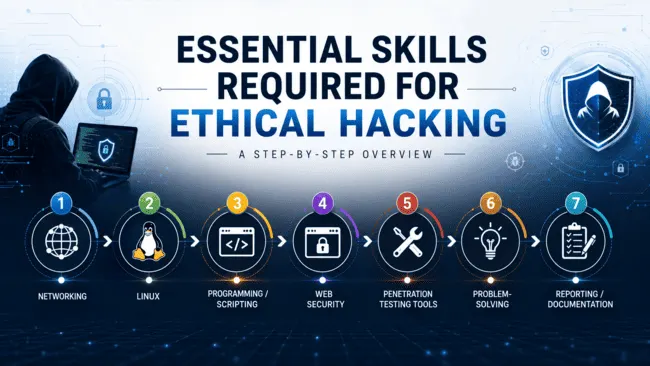
Skills required for ethical hacking include networking, operating systems, web security, scripting, security tools, reporting, and legal awareness.
 Ethical Hacking
An ethical hacking career path helps learners progress from cybersecurity fundamentals to authorised testing, entry-level roles and advanced security specialisations.
 DPDP
DPDPUnderstand India's Personal Data Protection Act, including its scope, key terms, business duties, individual rights, enforcement, penalties, and practical DPDP compliance steps.