Ethical Hacking Career Path: Start, Learn and Specialise

- Published:
- Last Updated:
An ethical hacking career path helps learners progress from cybersecurity fundamentals to authorised testing, entry-level roles and advanced security specialisations. It combines practical skills, responsible testing and continuous learning, creating opportunities in penetration testing, application security, cloud security and consulting.
Overview
The ethical hacking career path begins with networking, operating systems, web security and basic scripting. Learners then practise in authorised environments, build portfolio projects and apply for entry-level cybersecurity roles.
With experience, professionals can specialise in VAPT, application security, API testing, cloud security, red teaming or security consulting. Career growth depends on practical ability, ethical judgement, reporting skills and continuous development not certifications alone.
Key Findings
A successful ethical hacking career is built through structured learning, safe practice and practical evidence.
- Learn technical fundamentals before advanced tools.
- Practise only in authorised environments.
- Build projects that demonstrate real skills.
- Consider related entry-level cybersecurity roles.
- Use certifications to support, not replace practice.
- Develop reporting and remediation knowledge.
- Continue learning as technologies and threats evolve.
What Is an Ethical Hacking Career Path?
An Ethical Hacking Career Path is the progression from learning security fundamentals to performing authorised testing, documenting findings and moving into specialised cybersecurity roles.
The journey is not based on tools alone. Employers need professionals who can understand systems, verify weaknesses safely, explain business impact and recommend practical fixes. Learners may enter through internships or move from IT support, networking, development or security operations.
Networking provides a particularly valuable foundation because ethical hackers must understand IP addressing, protocols, services, system communication and infrastructure weaknesses before testing them effectively. This progression is also discussed in Network Bulls. “From Networking to Ethical Hacking: The Best Career Path to Cyber Security.” December 4, 2025.
Read more: How Ethical Hackers Protect Systems
Why is Choosing an Ethical Hacking Career Path a Smart Decision?
Choosing an ethical hacking career path is ideal for anyone interested in solving real-world cybersecurity challenges. Ethical hackers think like attackers but work legally and responsibly to protect systems.
Reasons to consider this career:
- Real-world impact: Prevents breaches, fraud, and data loss.
- Skill-based growth: Hands-on ability matters as much as formal education.
- Multiple career options: Penetration testing, cloud security, or consulting roles.
- Problem-solving: Investigate, analyze, and creatively resolve security gaps.
- Long-term demand: Digital reliance ensures ethical hacking remains crucial.
What Are the Main Ethical Hacking Career Stages?
The Ethical Hacking Career Path normally develops through foundation, practice, entry-level work, specialisation and senior responsibility.
| Career stage | Main focus | Evidence of readiness |
|---|---|---|
| Foundation | Networking, systems and web basics | Notes, diagrams and basic labs |
| Practical learner | Authorised vulnerable applications | Structured assessment reports |
| Entry level | Triage, validation and documentation | Confirmed findings and remediation notes |
| Specialist | Web, API, cloud or network testing | Complete scoped assessments |
| Senior level | Complex testing and quality review | Repeatable methods and business reporting |
| Leadership | Governance, mentoring and strategy | Team delivery and risk-based decisions |
- Foundation: Learn networking, systems and web basics through simple labs.
- Practical Learner: Practise on authorised applications and create reports.
- Entry Level: Validate findings and prepare remediation notes.
- Specialist: Conduct web, API, cloud or network assessments.
- Senior Level: Handle complex testing and review reports.
- Leadership: Manage teams, governance and risk-based decisions.
Read more: Legal Boundaries of Ethical Hacking
Who is Ethical Hacker Training Designed For?
Ethical hacking training is ideal for anyone seeking a practical cybersecurity career. It supports students, IT professionals, developers, and security beginners.
Suitable for:
- Students and freshers seeking hands-on cybersecurity skills.
- IT support staff moving toward security roles.
- Network administrators securing infrastructure.
- Developers understand secure coding and application risks.
- Security analysts learning the attacker mindset.
- Career switchers from technical backgrounds.
Who should avoid this path?
Not all learners are suited for this field:
- Those unwilling to learn fundamentals.
- Individuals seeking shortcuts without practice.
- Learners uncomfortable with legal and ethical boundaries.
- Those disliking documentation or reporting.
- Learners unwilling to commit to continuous learning.
How to Start Ethical Hacking Career Path Successfully?

Build your ethical hacking career through strong fundamentals, authorised practice and a portfolio that proves your practical skills.
Build your career through these practical milestones:
- Understand one system deeply: Learn how a website, network or operating system works before testing it.
- Complete one authorised assessment: Test a legal lab from scope definition to final report.
- Turn findings into business risks: Explain what could happen, who may be affected and why remediation matters.
- Prove that fixes work: Retest corrected weaknesses instead of stopping after discovery.
- Create a focused portfolio: Include two or three polished projects rather than dozens of screenshots.
- Apply for adjacent roles: Explore VAPT trainee, vulnerability analyst, SOC analyst and security-testing positions.
- Choose a specialisation later: Move into web, API, cloud or network security after building broad foundations.
A structured route involving education, skills development, certifications and professional experience is also outlined in Rand, B. “How to Become an Ethical Hacker (With Skills and Salary).” Indeed, updated June 15, 2026.
Read more: How AI Transforms Ethical Hacking
How Can Beginners Build a Job-Ready Portfolio?
A practical portfolio makes the Ethical Hacking Career Path visible to employers by showing how knowledge is applied in authorised environments.
Each project should include:
- 1.Approved scope and objective.
- 2.A simple lab diagram.
- 3.Testing method and sanitised evidence.
- 4.Technical and business impact.
- 5.Recommended remediation.
- 6.Retest results.
What Job Roles Can One Pursue in an Ethical Hacking Career?
The career offers multiple roles depending on skill and experience. Beginners usually start as junior analysts and move into advanced testing or consulting roles.
Common roles:
- Junior ethical hacker for basic testing and reporting.
- Penetration tester for networks, applications, and infrastructure.
- Vulnerability assessment analyst to identify and prioritize risks.
- Security analyst monitoring threats and alerts.
- Application security tester for web and APIs.
- Red team associate simulating attacker behavior under authorization.
What salary can ethical hackers expect?
Salary depends on experience, specialization, and location. Entry-level positions are modest, but specialized testers or analysts can earn significantly higher wages. Salary grows fastest with skill, certification, and hands-on experience. Career progression, responsibilities and salary considerations are discussed in Moore, Michelle. “How to Become an Ethical Hacker: Career & Salary Guide.” University of San Diego, n.d. Accessed July 15, 2026.
What Common Mistakes Delay Career Progress?
The Ethical Hacking Career Path slows when learners collect tools and certificates without building usable capability.
Common mistakes include:
- Starting advanced exploitation before learning fundamentals.
- Trusting scanner findings without manual verification.
- Ignoring reporting, remediation and retesting.
- Testing systems without permission.
- Applying only for “ethical hacker” roles.
- Attempting too many specialisations at once.
Read more: What Are Man-in-the-Middle Attacks?
Where Do Ethical Hacking Certifications Fit?
Certifications support an Ethical Hacking Career Path by organising learning and demonstrating foundational knowledge.
They should not replace hands-on practice. Beginners may start with a broad cybersecurity credential or introductory programme, followed later by practical penetration-testing, application-security or cloud-security certifications.
Conclusion
An ethical hacking career path is built through strong fundamentals, authorised practice, practical projects and continuous improvement. Learners who understand systems, validate findings and communicate risks clearly can progress into VAPT, application security, cloud security and penetration-testing roles.
Explore SecuRetain’s learning platform and our all courses to build practical knowledge in cybersecurity, compliance, risk management, audit, business continuity, disaster recovery, fraud management, and employee awareness training.
You can also visit our website to explore how SecuRetain helps professionals and organizations strengthen skills, improve awareness, and support continuous learning in a structured and scalable way.
FAQ's
A formal IT degree is optional; practical skills, authorised lab experience and a strong portfolio can also support career entry.
Web and application security are practical starting points because beginners can train safely in controlled environments.
Beginners should use personal labs, intentionally vulnerable applications and authorised cybersecurity training platforms.
Include the approved scope, testing method, sanitised evidence, risk impact, remediation and retesting results.
Networking, software development, IT support, SOC and security-analysis roles can provide valuable foundations.
Prepare for an ethical hacking career
Explore cybersecurity courses that help learners build practical skills, understand legal testing boundaries, and prepare for security roles.
Related reads
Keep exploring
 Ethical Hacking
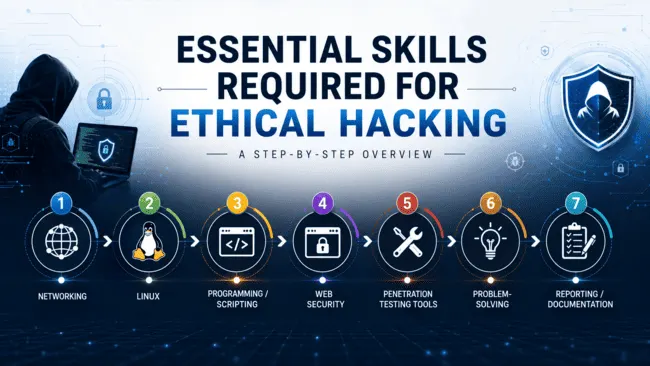
Skills required for ethical hacking include networking, operating systems, web security, scripting, security tools, reporting, and legal awareness.
 Ethical Hacking
Ethical hacking roadmap step by step provides a clear learning path for beginners to build technical skills, practice safely, specialize, and prepare for cybersecurity roles.
 DPDP
DPDPUnderstand India's Personal Data Protection Act, including its scope, key terms, business duties, individual rights, enforcement, penalties, and practical DPDP compliance steps.