Essential Skills Required for Ethical Hacking: A Step-by-Step Overview

- Published:
- Last Updated:
Skills required for ethical hacking include networking, operating systems, web security, scripting, security tools, reporting, and legal awareness. These skills help learners identify vulnerabilities safely, explain risks clearly, and support stronger cybersecurity decisions. In this guide, you will learn the essential skills, career value, future demand, and practical ways to improve your ethical hacking skill set.
How do ethical hacking skills help organizations improve cybersecurity?
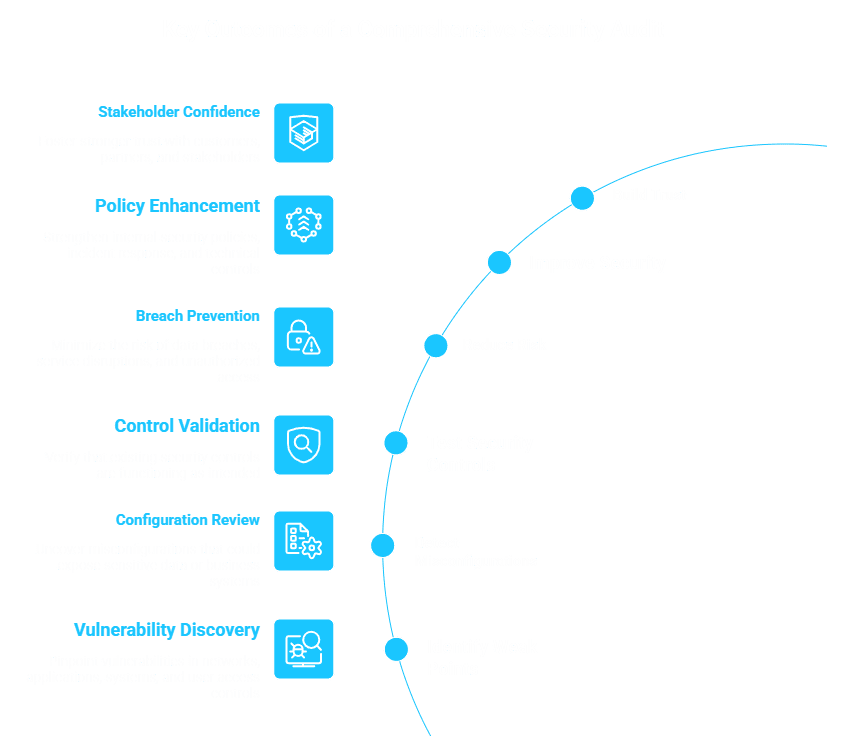
Ethical hacking skills help organizations find weaknesses before attackers misuse them. These skills support proactive security testing, risk reduction, safer systems, and better decision-making across digital environments.
Organizations benefit because these skills help them:
- Identify weak points in networks, applications, systems, and user access controls.
- Detect misconfigurations that may expose sensitive data or business systems.
- Test whether existing security controls are working as expected.
- Reduce the risk of data breaches, service disruption, and unauthorized access.
- Improve internal security policies, incident response, and technical controls.
- Build stronger trust with customers, partners, and stakeholders.
How do these skills reduce real security risks?
Ethical hackers use structured testing to understand how vulnerabilities can affect business operations.
- They check how attackers may enter a system.
- They verify whether sensitive data is exposed.
- They test login, access, and permission controls.
- They report weaknesses in a clear and useful format.
- They guide teams on what to fix first.
Ethical hacking is not only about finding flaws. Its real value comes from turning technical findings into practical security improvements.
Can ethical hacker skills lead to a strong cybersecurity career?
Yes, ethical hacker skills can lead to a strong cybersecurity career because organizations need professionals who can understand threats, test systems safely, and explain security risks clearly. These skills are useful across many roles, not just penetration testing.
These skills support career growth because they help you:
- Build practical cybersecurity knowledge instead of only theoretical understanding.
- Move into roles such as security analyst, penetration tester, or application security tester.
- Understand attacker behavior while staying within legal and ethical boundaries.
- Work with IT, development, audit, risk, and compliance teams.
- Develop problem-solving ability through real testing and investigation.
- Stay relevant as digital systems, cloud platforms, and applications continue to expand.
Which roles can these skills support?
Ethical hacker skills can support multiple cybersecurity job paths.
- Security analyst
- Vulnerability assessment analyst
- Penetration testing associate
- Application security tester
- Cloud security learner
- Cybersecurity consultant
A strong career is built through consistent practice, clear reporting, and responsible testing. Tools may change, but core problem-solving skills remain valuable.
What are the top skills needed to become an ethical hacker?
The top skills required for ethical hacking include networking, operating systems, web security, scripting, vulnerability testing, and reporting. These skills help you understand how systems work, where they fail, and how to explain security gaps responsibly.
| Skill / Question | Importance | How it Helps |
|---|---|---|
| Networking | Critical because most systems communicate via networks |
|
| Reporting | Essential because organizations need actionable guidance |
|
The best ethical hackers combine technical testing with clear communication. Finding a vulnerability is useful, but explaining it well makes it actionable.
What is the future of ethical hacker skills?
The future of ethical hacker skills is strong because businesses rely heavily on digital systems, cloud services, applications, data, and connected devices. As technology grows, the need to test and secure these systems also grows.
These skills will remain important because:
- More businesses are moving operations online.
- Cloud systems need continuous security testing.
- Web applications and APIs are common targets.
- Data protection expectations are increasing.
- AI-driven risks require stronger security awareness.
- Organizations need proactive testing before incidents happen.
What are the best ways to improve ethical hacker skills?
The best way to improve ethical hacker skills is to practice consistently in safe, legal environments while building strong fundamentals. Learning tools is useful, but real growth comes from understanding systems, testing carefully, and documenting what you learn.
You can improve your skill set by:
- Learning networking, operating systems, and web application basics first.
- Practicing in legal labs, virtual machines, and controlled environments.
- Studying common vulnerabilities and how they affect real systems.
- Writing reports for every practice activity, even small ones.
- Reviewing security case studies to understand real-world attack patterns.
- Building a portfolio that shows your learning progress and practical work.
How should beginners practice safely?
Beginners should practice only where they have permission.
- Use personal lab environments.
- Test intentionally vulnerable applications.
- Avoid testing public websites without written permission.
- Document each finding clearly.
- Focus on learning, not shortcuts.
How can learners build a useful portfolio?
A portfolio proves your practical ability.
- Add lab summaries.
- Include screenshots where appropriate.
- Explain the vulnerability clearly.
- Mention the impact in simple language.
- Add remediation steps.
- Keep the writing professional and easy to read.
A portfolio can separate serious learners from casual learners. It shows discipline, ethics, technical thinking, and communication skills.
What key ethical hacking terms should beginners understand?
Beginners should understand key cybersecurity terms because they help organize the learning journey and make content easier for search engines and AI systems to understand.
Important entities include:
- Vulnerability: A weakness in a system, application, network, or process that may create security risk.
- Penetration Testing: A controlled security test used to check whether vulnerabilities can be exploited.
- Reconnaissance: The process of gathering information about a system before deeper testing.
- Exploit: A method used to take advantage of a vulnerability in a controlled or malicious way.
- Remediation: The process of fixing or reducing a security weakness after it is discovered.
Understanding these terms helps beginners communicate like cybersecurity professionals and makes technical learning easier.
How should beginners start learning the skills required for ethical hacking?
Beginners should start with fundamentals, then move into safe practice, reporting, and specialization. The learning path should be steady and practical rather than rushed.
A simple starting path includes:
- Learn how computers, servers, networks, and applications work.
- Practice Linux commands and basic system administration.
- Understand web technologies such as forms, sessions, APIs, and databases.
- Learn common vulnerability types and how they are identified.
- Practice only in authorized environments.
- Create reports to explain what you tested, what you found, and how it can be fixed.
Do not begin by chasing advanced tools. Begin by understanding how systems work. Strong fundamentals make every advanced topic easier.
Conclusion
To succeed in ethical hacking, focus on mastering key skills: networking, operating systems, web security, scripting, vulnerability testing, and reporting. Practice in safe environments, build a portfolio of hands-on projects, understand core cybersecurity concepts, and continuously update your skills to stay prepared for evolving digital threats.
To take your learning to the next level, explore our diverse selection of courses designed to help you grow professionally. Visit our Courses page to find the perfect course for your needs.
Start your journey today with SecuRetain, where we support your path to success.
FAQ's
They help organizations identify vulnerabilities, strengthen security, and prevent cyberattacks before they occur.
Yes, they offer strong growth, diverse opportunities, and high demand in the cybersecurity field.
Networking, operating systems, web security, scripting, and vulnerability assessment are the most important skills.
The demand will grow as digital systems, cloud services, and cybersecurity threats continue to expand.
Practice in safe environments, study vulnerabilities, build a portfolio, use hands-on labs, and continuously update knowledge.
Build ethical hacking skills with structured learning
Explore cybersecurity courses that help learners strengthen fundamentals, practice safely, and build job-ready ethical hacking skills.
Related reads
Keep exploring
 Ethical Hacking
Ethical hacking is the authorized practice of testing systems, networks, applications, and security processes to find weaknesses before attackers exploit them.
 Ethical Hacking
Ethical hacking roadmap step by step provides a clear learning path for beginners to build technical skills, practice safely, specialize, and prepare for cybersecurity roles.
 Ethical Hacking
An ethical hacking career path helps learners progress from cybersecurity fundamentals to authorised testing, entry-level roles and advanced security specialisations.