How to Test Password Strength Using Ethical Hacking Techniques: A Complete Guide

- Published:
- Last Updated:
Password strength testing helps identify weak passwords before attackers can exploit them. Ethical hackers simulate attacks to check how strong passwords are, find vulnerabilities, and provide practical recommendations. This guide explains common testing methods, step-by-step procedures, and actions to improve security in organizations.
What Is Password Strength Testing?
Password strength testing evaluates how resistant a password is to guessing, cracking, or brute-force attacks, ensuring accounts remain secure against unauthorized access.
Testing password strength involves assessing complexity, length, and predictability. Ethical hackers use controlled simulations to determine whether passwords can withstand hacking techniques. This process helps organizations identify weak credentials and enforce policies that reduce security risks.
Why Do Ethical Hackers Test Password Strength?
Ethical hackers test passwords to identify weak points before attackers can exploit them. This ensures systems and sensitive data remain protected.
Key reasons for testing password strength include:
- Prevent Unauthorized Access: Protect accounts and systems from intrusions.
- Reduce Data Breach Risks: Weak passwords can lead to compromised data; testing helps avoid this.
- Support Compliance: Ensures organizational policies and regulatory standards are met.
- Improve Overall Security Posture: Encourages secure password practices across the organization.
- Provide Actionable Feedback: Helps IT teams enforce stronger password rules.
Read also: What Is Enumeration in Ethical Hacking?
Why Does Password Strength Matter for Businesses?
Strong passwords safeguard sensitive information and prevent unauthorized access, helping maintain trust and operational continuity.
Businesses benefit from password strength testing in these ways:
- Protect Sensitive Information: Prevent confidential data from being exposed.
- Prevent Financial Loss: Weak passwords can result in fraudulent activity.
- Maintain Reputation: Avoid reputational damage from breaches.
- Ensure Compliance: Support internal policies and external audits.
- Encourage Secure Practices: Promote complex and unique passwords.
- Enhance Employee Awareness: Educate staff on secure password usage.
How Do Ethical Hackers Test Password Security Safely?
Testing passwords should be safe and non-disruptive to the organization's operations.
Safe testing practices include:
- Work in Controlled Environments: Use isolated networks or testing labs.
- Obtain Proper Authorization: Ensure legal permission is granted before testing.
- Use Non-Destructive Methods: Avoid causing damage to systems or data.
- Follow Ethical Standards: Maintain integrity and transparency during testing.
- Document Testing Steps: Keep detailed records for audit and remediation purposes.
What Are Common Password Testing Techniques Used in Ethical Hacking?
Ethical hackers use different methods to evaluate how easy it is to compromise passwords.
Common techniques include:
- Brute-Force Attacks: Try all possible character combinations.
- Dictionary Attacks: Use lists of common or leaked passwords.
- Password Spraying: Test a few common passwords across many accounts.
- Hybrid Attacks: Combine dictionary words with numbers, symbols, or variations.
- Combination Testing: Mix multiple techniques for comprehensive assessment.
Read more: How Ethical Hacking Helps Identify Credential Theft Risks
How Do Ethical Hackers Test Password Strength?
Ethical hackers follow a structured approach to evaluate password security effectively.
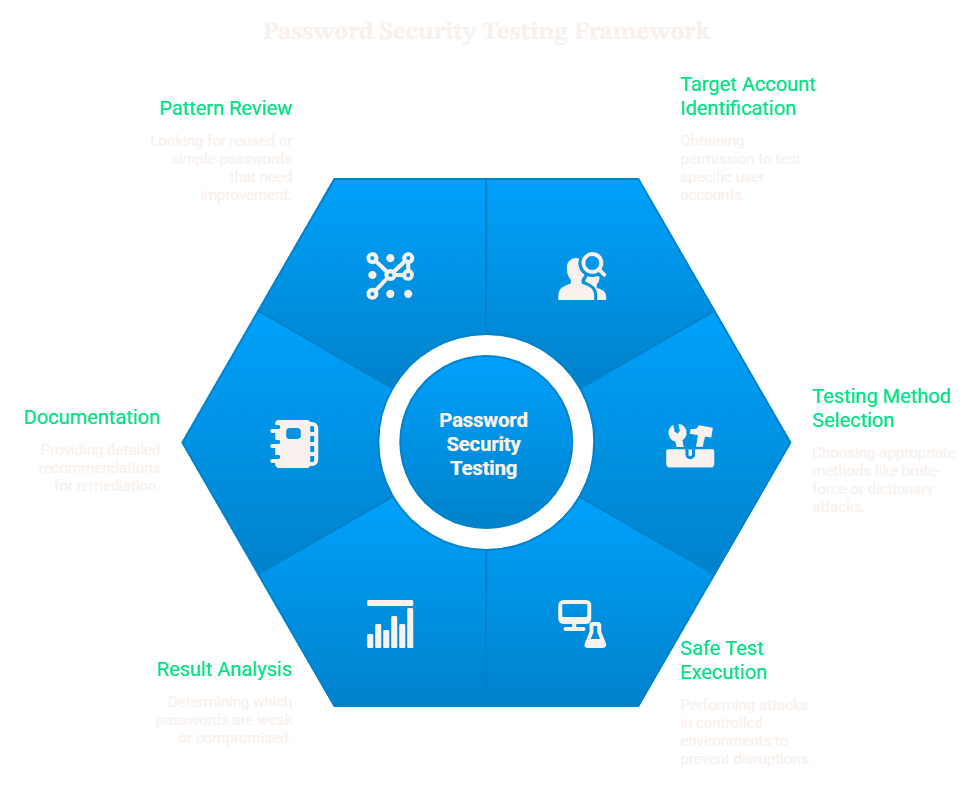
Key steps include:
- Identify Target Accounts: Get permission to test specific user accounts.
- Select Testing Methods: Choose appropriate methods like brute-force or dictionary attacks.
- Run Tests Safely: Perform attacks in controlled environments to prevent disruptions.
- Analyze Results: Determine which passwords are weak or compromised.
- Document Findings: Provide detailed recommendations for remediation.
- Review Patterns: Look for reused or simple passwords that need improvement.
What Are the Core Assessment Criteria?
Password testing evaluates multiple factors that determine how secure a password is.
Focus on these core criteria:
| Criteria | Description | Why It Matters |
|---|---|---|
| Length | 12-16+ characters | Harder to guess or crack |
| Complexity | Mix of uppercase, lowercase, numbers, symbols | Reduces predictability |
| Uniqueness | Not reused across accounts | Prevents multiple accounts being compromised |
| Predictability | Avoid dictionary words or personal info | Limits success of common attacks |
| Breach Exposure | Not listed in breach databases | Reduces risk from previously leaked passwords |
- Length: Longer passwords are harder to guess.
- Complexity: Include letters, numbers, and symbols.
- Uniqueness: Do not reuse passwords across accounts.
- Predictability: Avoid dictionary words or personal information.
- Exposure: Check against known breached password databases.
What Are the Key Objectives and Tools of Password Strength Testing?
Testing passwords aims to reduce risk and improve overall security while supporting compliance.
Objectives and tools used include:
- Risk Reduction: Identify weak passwords to prevent breaches.
- Compliance Support: Meet internal policies and external regulations.
- Testing Tools: Use automated software to simulate attacks and generate reports.
- Password Managers: Securely store and generate strong credentials.
- Reporting Frameworks: Provide actionable recommendations for improvement.
Read also: How to Start Ethical Hacking for Beginners
How Can You Protect Your Systems After Testing Password Strength?
After testing, organizations must take steps to maintain strong password security.
Protection measures include:
- Enforce Strong Password Policies: Minimum length, complexity, and expiration rules.
- Encourage Unique Passwords: Avoid reuse across systems and accounts.
- Use Password Managers: Simplify secure storage and generation.
- Apply Multi-Factor Authentication: Add an extra layer of protection for critical accounts.
- Educate Employees: Teach safe practices and awareness of phishing or social engineering.
- Monitor Accounts: Watch for unusual login activity or failed attempts.
Conclusion
Testing password strength using ethical hacking techniques is essential for maintaining organizational security. By simulating attacks, analyzing passwords, and enforcing policies, businesses can reduce the risk of unauthorized access. Regular testing, employee education, and multi-factor authentication help keep accounts and sensitive data safe.
Explore SecuRetain's learning platform and our all courses to build practical knowledge in cybersecurity, compliance, risk management, audit, business continuity, disaster recovery, fraud management, and employee awareness training.
You can also visit our website to explore how SecuRetain helps professionals and organizations strengthen skills, improve awareness, and support continuous learning in a structured and scalable way.
FAQs
Password strength testing is the process of evaluating how resistant passwords are to attacks such as brute-force, dictionary, or password spraying, helping ensure organizational accounts remain secure.
Businesses conduct it to prevent unauthorized access, reduce data breach risks, and enforce secure password policies across employees and systems.
Ethical hackers conduct password strength testing in controlled environments, with authorization, and using non-destructive methods to prevent system disruption while assessing security.
Organizations should perform it regularly, particularly after onboarding new employees, system updates, or security incidents, to maintain continuous protection.
Yes, they highlight weak, reused, or predictable passwords, allowing organizations to enforce stronger policies and educate employees on safe practices.
Strengthen password security skills
Explore cybersecurity courses that help teams understand password testing, credential risk, MFA, access control, and practical security hygiene.
Related reads
Keep exploring
 Ethical Hacking
Ethical hackers legally test networks, applications, cloud platforms, and security controls to find vulnerabilities and recommend fixes.
 Ethical Hacking
Ethical Hacking for Credential Theft Detection helps organizations identify weak passwords, exposed credentials, phishing risks, MFA gaps, and access control weaknesses.
 Cybersecurity
Proper password management in cybersecurity helps organizations prevent data breaches, protect sensitive systems, and maintain compliance.