Why Is Ethical Hacking a Good Career? Future Opportunities Explained

- Published:
- Last Updated:
Ethical hacking can be a good career for people who enjoy technology, investigation, continuous learning and solving complex security problems.It offers strong career relevance because organizations need professionals who can find weaknesses before attackers do. In this guide, you will learn what the role means, why demand is growing, key job options, and future opportunities.
Overview
Ethical hacking is the authorised testing of applications, networks, cloud environments and other systems to identify weaknesses before malicious attackers exploit them. As a career, it combines technical investigation, business-risk analysis, communication and remediation support.
Ethical hacking may suit learners who enjoy:
- Investigating how systems work
- Solving unfamiliar technical problems
- Learning continuously
- Documenting evidence
- Explaining risk clearly
- Working within strict ethical boundaries
Key Findings
Ethical hacking offers strong career opportunities for learners with technical curiosity and responsible security practices.
- It requires permission and a defined testing scope.
- Core skills include networking, web security, scripting and reporting.
- Demand is growing in cloud, API and application security.
- Practical experience matters as much as certifications.
- AI will assist testing, but human judgement remains essential.
What is Ethical Hacking in Simple Terms?
Ethical hacking is the legal and authorized process of testing systems, networks, applications, websites, or devices to identify security weaknesses before cybercriminals can exploit them. Ethical hackers work with permission and within a clearly defined scope.
Their role includes finding vulnerabilities that could lead to data exposure or unauthorized access, checking whether security controls are functioning properly, documenting risks in a clear and useful format, recommending practical fixes, and helping organizations strengthen their overall security posture.
What Skills and Qualifications Do Ethical Hackers Need?
Ethical hackers need technical knowledge, analytical ability, communication skills and professional judgement.
Important technical skills include:
- Networking, DNS, IP addresses, ports and protocols
- Linux and Windows administration
- HTTP, sessions and authentication
- Web application and API security
- Basic Python, Bash or JavaScript
- Vulnerability assessment and validation
- Evidence collection, reporting and retesting
Read also: What Is Enumeration in Ethical Hacking?
Why Ethical Hacking Is a Good Career?
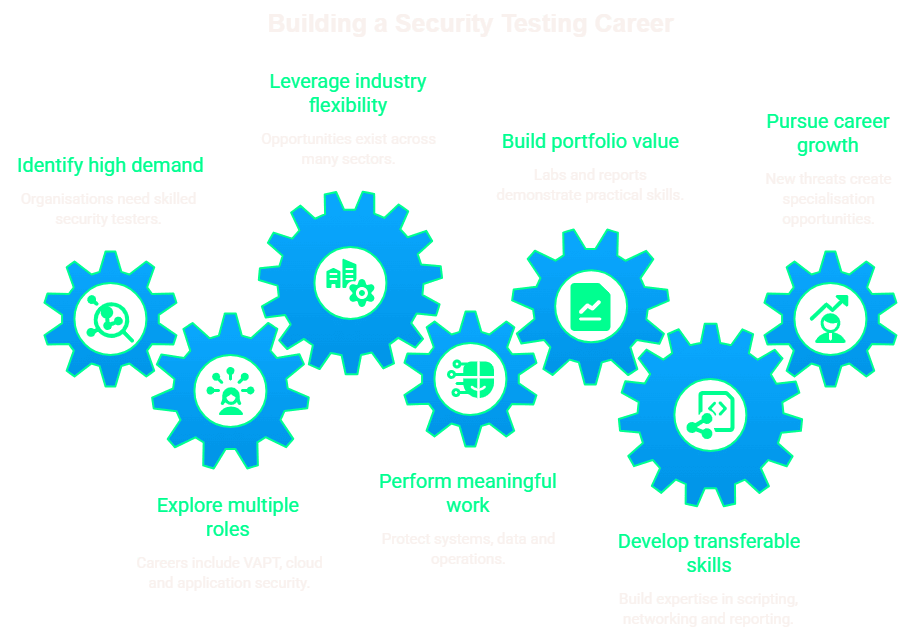
Ethical hacking offers strong career opportunities, practical work and continuous professional growth.
- High demand: Organisations need skilled security testers.
- Multiple roles: Careers include VAPT, cloud and application security.
- Industry flexibility: Opportunities exist across many sectors.
- Meaningful work: Protect systems, data and operations.
- Portfolio value: Labs and reports demonstrate practical skills.
- Transferable skills: Build expertise in scripting, networking and reporting.
- Career growth: New threats create specialisation opportunities.
- Human judgement: Experts must validate AI-assisted findings.
These career advantages and the growing organisational need for proactive security testing are also discussed in Berisha, Ardian. “The Advantages of Pursuing an Ethical Hacking Career.” PECB, n.d. Accessed July 15, 2026.
How do Ethical Hackers Help Organizations?
Ethical hackers help organizations by finding vulnerabilities, validating risks, and guiding teams on how to fix security weaknesses. Their work reduces the chances of cyberattacks, data breaches, and operational disruption.
Organizations benefit because ethical hackers:
- Test applications, networks, and systems before attackers target them.
- Identify weak passwords, exposed services, and insecure configurations.
- Check whether access controls are properly designed.
- Help teams understand the severity of each vulnerability.
- Provide evidence-based findings instead of assumptions.
- Support stronger security policies, controls, and awareness.
How is ethical hacking different from illegal hacking?
Ethical hacking is authorized, documented, and performed to improve security.
- It is done with permission.
- It follows a defined testing scope.
- It protects data and systems.
- It provides reports and recommendations.
- It supports business and cybersecurity goals.
The key difference is intent and permission. Ethical hackers use technical skills to protect systems, not harm them.
Read also: What Are Social Engineering Attacks?
Why Are Ethical Hackers in Demand Today?
Ethical hackers are in demand because organizations need skilled cybersecurity professionals who can test systems, reduce risk, and improve resilience. This growing career relevance is examined in Oberoi, Renu. “Is a Career in Ethical Hacking Worth It?” Amity University Noida, June 19, 2026. Demand is linked to rising cyber threats, cloud adoption, digital transformation, and regulatory expectations.
Demand is supported by:
- Growing use of digital platforms and online services.
- More applications, APIs, and cloud environments to secure.
- Increased concern around data breaches and cyber incidents.
- Greater need for proactive testing and vulnerability management.
- Compliance and risk management requirements.
- Shortage of skilled cybersecurity professionals in many markets.
Which Job Titles Should You Search for Besides “Ethical Hacker”?
Ethical-hacking opportunities are often advertised under different job titles. Searching for related positions can help beginners discover more suitable entry-level openings.
Relevant job titles include:
- Junior penetration tester
- VAPT analyst
- Vulnerability-assessment analyst
- Application-security analyst
- Red-team associate
- Security-testing analyst
- Cybersecurity consultant
- Security analyst with VAPT responsibilities
Candidates should compare the responsibilities, required skills and experience instead of relying only on the title. A wider range of cybersecurity and security-administration roles is also described in MyComputerCareer. “Is Ethical Hacking in Demand?” MyComputerCareer, n.d. Accessed July 15, 2026.
Read more: How to Test Password Strength Using Ethical Hacking
What Is the Future Scope of Ethical Hacking?
The future scope of ethical hacking remains positive because organisations continue adopting cloud services, APIs, mobile applications, artificial intelligence and connected devices. These technologies create new systems that require secure design, vulnerability testing and continuous assessment.
Artificial intelligence may automate research, scripting and initial vulnerability analysis, but it is unlikely to remove the need for human judgement. Ethical hackers will still need to confirm authorisation, validate findings, understand business context and communicate risk accurately.
Which future skills should learners focus on?
Learners should focus on skills that match modern security needs.
- Cloud security basics.
- API security testing.
- Secure coding awareness.
- Threat modeling.
- Vulnerability reporting.
- Risk-based remediation planning.
Conclusion
Ethical hacking is more than a technical career; it is a chance to solve real problems, stay ahead of evolving threats and make a visible impact on business security. With opportunities in VAPT, cloud security, application security and consulting, learners can build a flexible and future-focused career.
Explore SecuRetain’s learning platform and our all courses to build practical knowledge in cybersecurity, compliance, risk management, audit, business continuity, disaster recovery, fraud management, and employee awareness training.
You can also visit our website to explore how SecuRetain helps professionals and organizations strengthen skills, improve awareness, and support continuous learning in a structured and scalable way.
FAQs
Yes, it offers strong demand, varied job roles and long-term growth opportunities.
It can be challenging initially, but structured learning and regular practice make it manageable.
Basic coding is helpful, but advanced programming is not required to begin.
Options include penetration tester, VAPT analyst, security consultant and application-security analyst.
No, AI can assist testing, but human judgement remains essential for validation and risk assessment.
Build career-ready cybersecurity skills
Explore SecuRetain courses that support practical testing, reporting, specialisation, and continuous professional growth.
Related reads
Keep exploring
 Ethical Hacking
An ethical hacking career path helps learners progress from cybersecurity fundamentals to authorised testing, entry-level roles and advanced security specialisations.
 Ethical Hacking
An ethical hacking certification helps learners prove cybersecurity knowledge, build hands-on confidence, and follow a clear career path.
 DPDP
DPDPUnderstand India's Personal Data Protection Act, including its scope, key terms, business duties, individual rights, enforcement, penalties, and practical DPDP compliance steps.