What are Tools Used by Ethical Hackers: From Learning to Implementation Guide

- Published:
- Last Updated:
Tools used by ethical hackers help security professionals identify vulnerabilities, test defenses, analyze risks, and strengthen systems before attackers exploit them. These tools support tasks like reconnaissance, vulnerability scanning, password testing, web application testing, network analysis, and reporting, making ethical hacking more structured, accurate, and business-focused. This guide explains key ethical hacking tool categories, including reconnaissance, vulnerability scanning, password testing, web application testing, network analysis, and reporting, while showing how they support secure development and stronger cybersecurity practices.
What Are Ethical Hacking Tools?
Ethical hacking tools are software, frameworks, and utilities used to legally test the security of networks, applications, cloud systems, and user access controls. They help ethical hackers identify weak points before malicious attackers exploit them and support different stages of security testing, such as scanning, exploitation, analysis, and reporting.
These tools reduce manual effort, improve testing accuracy, provide useful evidence for security teams, and make the testing process more repeatable and measurable. Ethical hacking tools are only effective when used with proper authorization, technical knowledge, and a clear testing scope. Read also: Is Ethical Hacking a Good Career
Which Types of Tools Are Used by Ethical Hackers?
The tools used by ethical hackers are grouped based on the security activity they support, such as scanning, testing, monitoring, or reporting.
| Tool Category | Purpose | Example Use |
|---|---|---|
| Reconnaissance tools | Collect public information about systems | Finding domains, IPs, and exposed services |
| Network scanning tools | Identify open ports and running services | Checking network exposure |
| Vulnerability scanners | Detect known security weaknesses | Finding outdated software or misconfigurations |
| Web application testing tools | Test websites and APIs | Finding SQL injection or XSS risks |
| Password testing tools | Check password strength | Testing weak or reused passwords |
| Packet analysis tools | Inspect network traffic | Detecting suspicious communication |
| Reporting tools | Document findings | Creating remediation reports |
Read also: Ethical Hacking Career Path Step by Step
Why Does Learning Ethical Hacking Tools Matter?
Learning tools matters because modern cybersecurity work depends on practical testing, validation, and risk reduction.
- It helps professionals move from theory to real-world security testing.
- It improves understanding of how attackers identify and exploit weaknesses.
- It supports career paths such as penetration testing, VAPT, SOC analysis, and security consulting.
- It helps organizations reduce breach risks through proactive testing.
- It builds confidence in reading logs, reports, vulnerabilities, and technical evidence.
- It improves communication between security, IT, development, and compliance teams.
Read also: Ethical Hacking Roadmap Step by Step: Key Skills and Specializations
What Are the Most Common Tools Used by Ethical Hackers?
The most common tools used by ethical hackers include scanners, proxies, password testers, packet analyzers, and exploitation frameworks.
- Nmap is commonly used for network discovery, port scanning, and service detection.
- Burp Suite helps test web applications, APIs, authentication flows, and input validation.
- Wireshark is used to inspect packets and understand network behavior.
- Metasploit supports controlled exploitation and proof-of-concept testing.
- John the Ripper helps test password strength and weak credential practices.
- Nikto can scan web servers for outdated software and risky configurations.
How Should Beginners Choose Ethical Hacking Tools?
Beginners should choose tools based on learning goals, not popularity.
- Start with networking basics before using advanced scanners.
- Learn web security concepts before using web testing tools.
- Practice in legal labs such as intentionally vulnerable environments.
- Understand tool output instead of copying commands blindly.
- Document each finding clearly with risk, impact, and fix.
- Avoid testing real systems without written permission.
A beginner who understands one tool deeply is more valuable than someone who runs many tools without understanding the results. Read also: Essential Skills Required for Ethical Hacking
How do Ethical Hacking Tools Integrate with Best Development Practices?
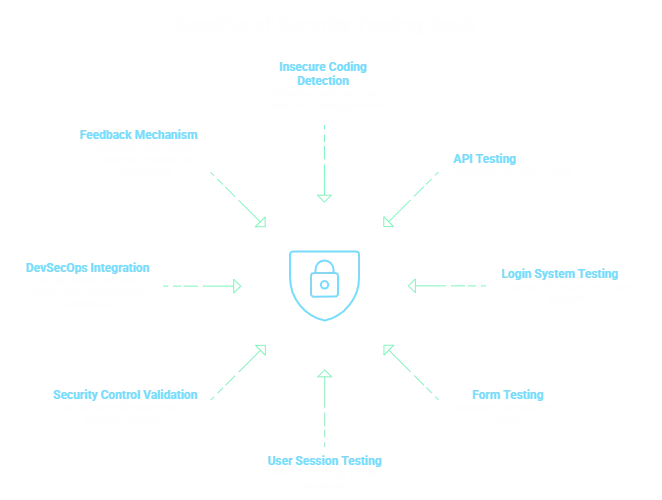
Ethical hacking tools support secure development by helping teams identify security issues early in the software development lifecycle.
- They help developers detect insecure coding patterns before release.
- They support secure testing of APIs, login systems, forms, and user sessions.
- They help validate whether security controls are working as expected.
- They reduce the chance of vulnerabilities reaching production.
- They support DevSecOps by adding security checks into development workflows.
- They help security teams give developers clear, fix-focused feedback.
- How Can Teams Integrate These Tools Into Development?
Teams can integrate ethical hacking tools into development through regular testing and continuous validation.
- Add vulnerability scans during build and deployment stages.
- Test APIs before releasing new features.
- Review authentication, authorization, and session management.
- Use secure coding checklists during development.
- Retest fixed vulnerabilities before closing issues.
- Maintain reports for audits and compliance reviews.
Ethical hacking tools work best when they are part of a continuous security process, not a one-time activity before launch
What Is The Purpose Of Ethical Hacking Tools?
The main purpose of tools used by ethical hackers is to identify, validate, and help fix security weaknesses before they become real incidents.
- They detect vulnerabilities in networks, systems, applications, and cloud environments.
- They help measure the strength of security controls.
- They support risk-based prioritization by showing which issues matter most.
- They provide evidence for remediation and compliance documentation.
- They help organizations prepare for audits, assessments, and security reviews.
- They improve customer, partner, and stakeholder trust.
Read also: How to Start Ethical Hacking for Beginners
Conclusion
Tools used by ethical hackers play a major role in finding vulnerabilities, improving defenses, and supporting secure digital growth. However, tools are only one part of ethical hacking. Real value comes from skill, authorization, accurate analysis, and clear reporting that helps organizations fix risks before attackers exploit them.
To take your learning to the next level, explore our diverse selection of courses designed to help you grow professionally. Visit our Courses page to find the perfect course for your needs.
Start your journey today with SecuRetain, where we support your path to success.
FAQ's
Common tools include network scanners, vulnerability scanners, web testing tools, password testers, packet analyzers, and reporting tools.
Learning these tools helps professionals find security gaps, test defenses, and reduce cyber risks before attackers exploit them.
During development, these tools help test applications, APIs, login systems, and code changes before release.
The main purpose is to identify, validate, and report weaknesses so organizations can fix them quickly.
Tool selection depends on the testing goal, system type, risk level, project scope, and required accuracy.
Strong results come from legal use, regular testing, expert analysis, and timely remediation.
Learn ethical hacking tools with structure
Explore cybersecurity courses that help learners move from concepts to practical testing, documentation, and secure implementation.
Related reads
Keep exploring
 Ethical Hacking
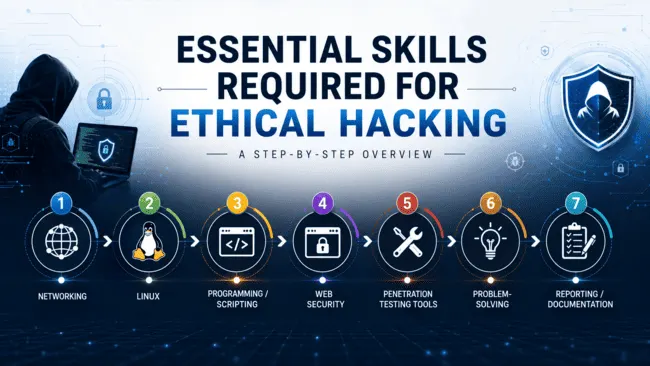
Skills required for ethical hacking include networking, operating systems, web security, scripting, security tools, reporting, and legal awareness.
 Ethical Hacking
An ethical hacking career path helps learners progress from cybersecurity fundamentals to authorised testing, entry-level roles and advanced security specialisations.
 DPDP
DPDPUnderstand India's Personal Data Protection Act, including its scope, key terms, business duties, individual rights, enforcement, penalties, and practical DPDP compliance steps.