What Is a Zero-Day in Ethical Hacking? A Complete Beginner's Guide

- Published:
- Last Updated:
A zero-day in ethical hacking is a security weakness that is not yet known to the software company or does not have a fix available. Ethical hackers study zero-days to understand the risk, test security safely, and help organizations prepare before attackers misuse the flaw. This guide will explain what a zero-day means, why it is dangerous, how ethical hackers handle it responsibly, and how organizations can reduce zero-day attack risk.
What is a Zero-Day?
A zero-day in ethical hacking refers to a security weakness that has been discovered before the vendor has had time to fix it. The term "zero-day" means the vendor has had zero days to prepare a patch or defense.
| Term | Simple Meaning |
|---|---|
| Zero-Day Vulnerability | The unknown or unpatched weakness |
| Zero-Day Exploit | The method used to take advantage of the weakness |
| Zero-Day Attack | The actual attack using that weakness |
| Patch | The fix released by the vendor |
| Disclosure | Reporting the issue safely |
Defining a Zero-Day Vulnerability, Exploit, and Attack
Zero-day Vulnerability: Is the actual security weakness in software, hardware, or a system that the vendor does not know about yet or has not fixed. For example, it could be a flaw in an application, browser, operating system, or plugin that creates an opening for attackers.
Zero-day Exploit: Is the method or technique used to take advantage of that weakness. It shows how the vulnerability can be used to bypass security, gain access, steal data, or disrupt a system. In ethical hacking, exploit research must be done only in authorized and controlled environments.
Zero-day Attack: Happens when attackers use the exploit against a real target before a patch or fix is available. This makes zero-day attacks highly dangerous because security teams may not have clear detection rules, updates, or defenses ready at the time of attack.
In simple terms, the vulnerability is the weakness, the exploit is the way to use that weakness, and the attack is when that weakness is used against a real system.
Read also: What Is Enumeration in Ethical Hacking?
How Do Hackers Discover Zero-Day Vulnerabilities?
Hackers may discover zero-days through code review, fuzz testing, reverse engineering, bug bounty research, product testing, or threat investigation. Ethical hackers report them responsibly, while malicious attackers may misuse them. In ethical hacking, this process must be done only with permission, inside approved systems, and with responsible reporting.
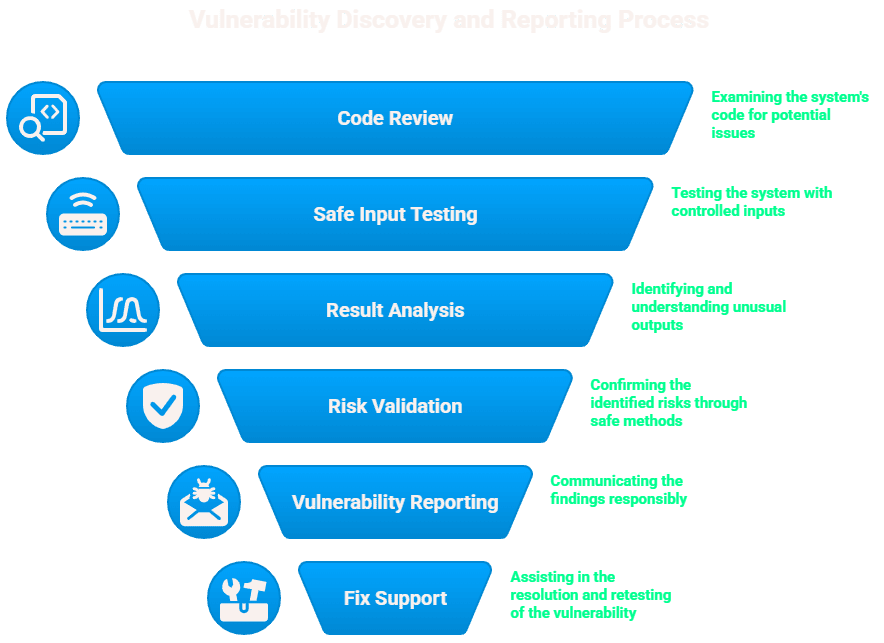
Step 1: Understand the Target System
Ethical hackers first study how the software, application, or system works. They look at its features, inputs, permissions, and possible weak areas.
Step 2: Review the Code or Application Behavior
They may review source code, application logic, or system behavior to find mistakes such as weak validation, insecure access controls, or unsafe processing.
Step 3: Test With Safe Inputs
Ethical hackers test how the system reacts to different inputs in a controlled environment. This helps them find crashes, errors, or unexpected behavior.
Step 4: Analyze Unusual Results
If the system behaves strangely, they investigate whether it is just a normal bug or a serious security weakness.
Step 5: Validate the Risk Safely
They check whether the weakness could affect confidentiality, integrity, or availability without causing harm or exposing real data.
Step 6: Report the Vulnerability Responsibly
If it is a real zero-day vulnerability, ethical hackers report it to the vendor or organization with clear details so they can fix it before attackers misuse it.
Step 7: Support Fixing and Retesting
After the vendor creates a patch, ethical hackers may help retest the issue to confirm that the weakness has been properly fixed.
What Is the Zero-Day Lifecycle?
The zero-day lifecycle explains the journey of a zero-day vulnerability from the time it is discovered to the time it is fixed and protected against. It helps ethical hackers and security teams understand how a hidden weakness becomes a known risk and how organizations should respond.
- Unknown Vulnerability Exists: A zero-day starts when a security flaw exists in software, hardware, or an application, but the vendor and users do not know about it yet.
- Vulnerability Is Discovered: The flaw may be found by an ethical hacker, security researcher, internal team, or attacker. Ethical hackers test only in authorized environments.
- Risk Is Validated: The weakness is checked carefully to understand whether it can cause real security impact, such as data exposure or unauthorized access.
- Responsible Disclosure Happens: If found ethically, the vulnerability is reported to the vendor or affected organization with clear details.
- Vendor Develops a Fix: The vendor investigates the issue and creates a patch or temporary mitigation to reduce the risk.
- Patch or Guidance Is Released: Once the fix is ready, organizations must apply the update quickly to protect affected systems.
- Public Awareness and Remediation Begin: After the issue becomes public, security teams monitor systems, apply fixes, and check for signs of exploitation.
- Retesting and Monitoring Continue: Ethical hackers or security teams retest the system to confirm the issue is fixed and continue monitoring for future threats.
In simple terms, the zero-day lifecycle moves from hidden weakness to discovery, reporting, fixing, patching, and continuous monitoring.
Why Are Zero-Day Vulnerabilities Significant?
Zero-day vulnerabilities are significant because they give attackers an advantage before defenders have a patch, signature, or full understanding of the threat. This makes them harder to detect and more urgent to manage.
- Zero-days can bypass tools that detect only known threats.
- Widely used software can expose many users at once.
- Attackers may use them for data theft, ransomware, or unauthorized access.
- Security teams must act quickly because fixes may not be ready.
- Business operations, trust, and compliance can be affected.
- Layered security becomes essential to reduce damage.
How to Prevent Zero-Day Attacks
Zero-day attacks cannot always be fully prevented, but organizations can reduce their impact through secure design, monitoring, access control, and incident readiness. Prevention means making exploitation harder and damage smaller.
- Use secure coding practices during software development.
- Run regular vulnerability assessments and penetration tests.
- Monitor known exploited vulnerabilities and vendor advisories.
- Use multi-factor authentication to reduce account compromise risk.
- Back up important data and test recovery processes.
- Train employees to report suspicious emails, links, and system behavior.
What Are Examples of Zero-Day Attacks?
Examples of zero-day attacks usually involve attackers exploiting unknown or unpatched flaws in browsers, operating systems, enterprise software, mobile devices, or security appliances. These cases show why zero-day in ethical hacking research is important for defense.
- Browser zero-days can affect users through unsafe websites or harmful content.
- Email server zero-days can expose private business emails and communication.
- Mobile zero-days can target phones through apps, links, or messages.
- Enterprise software zero-days can impact many organizations at the same time.
- Security appliance zero-days are risky because they target protection tools.
- Industrial system zero-days can affect critical operations and infrastructure.
Read also: Cybersecurity Awareness Programs for Organizations 2026
Conclusion
A zero-day in ethical hacking is an unknown or unpatched weakness that ethical hackers study to improve security, not to cause harm. It becomes dangerous when attackers exploit it before vendors release a fix.
Organizations can reduce zero-day risk through layered defense, monitoring, access control, patch management, secure development, and incident response planning.
To take your learning to the next level, explore our diverse selection of courses designed to help you grow professionally. Visit our Courses page to find the perfect course for your needs.
Start your journey today with SecuRetain, where we support your path to success.
FAQ's
A zero-day in ethical hacking is an unknown or unpatched security weakness that ethical hackers study safely to understand risk and help organizations prevent attacks.
Zero-day vulnerabilities are dangerous because attackers may exploit them before a patch, warning, or detection rule is available.
A zero-day vulnerability is the weakness, while a zero-day attack happens when attackers use that weakness against a real system.
Ethical hackers handle zero-day vulnerabilities by testing only in authorized environments, validating the risk safely, and reporting the issue responsibly.
Zero-day attacks cannot always be fully prevented, but organizations can reduce risk with layered security, monitoring, patch management, access control, and incident response planning.
Understand vulnerability lifecycle
Learn vulnerability discovery, responsible disclosure, and risk mitigation through courses and labs.
Related reads
Keep exploring
 Ethical Hacking
Ethical hacking techniques help security professionals identify weak points in systems, networks, applications, and human behavior before attackers can exploit them.
 Ethical Hacking
Ethical hackers legally test networks, applications, cloud platforms, and security controls to find vulnerabilities and recommend fixes.
 DPDP
DPDPUnderstand India's Personal Data Protection Act, including its scope, key terms, business duties, individual rights, enforcement, penalties, and practical DPDP compliance steps.