How to Stay Updated on the Latest Ethical Hacking Techniques

- Published:
- Last Updated:
The latest ethical hacking techniques help security professionals test systems safely, find vulnerabilities earlier, analyze real-world threats, and improve cyber defense. Staying updated is important because attack methods, tools, and vulnerabilities change quickly. In this article, you will learn how to follow trusted sources, practice safely, use threat databases, and build practical skills.
What Are the Latest Ethical Hacking Techniques?
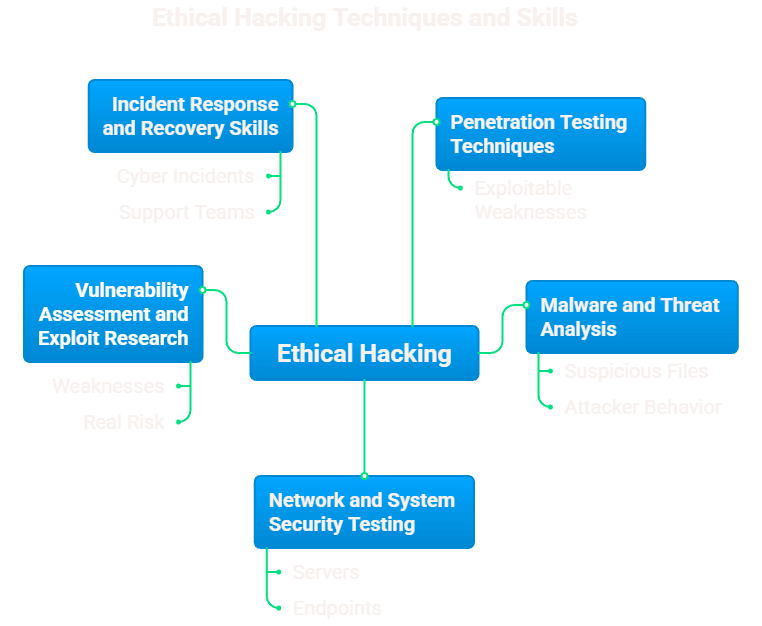
The latest ethical hacking techniques include penetration testing, vulnerability assessment, malware analysis, cloud security testing, API testing, and incident response practice. These techniques help ethical hackers understand how attackers think without causing harm.
What Are Penetration Testing Techniques
Penetration testing techniques focus on safely testing systems to find exploitable weaknesses.
- Web application testing helps identify authentication, access control, and input validation issues.
- API testing checks whether application interfaces expose sensitive data or weak permissions.
- Cloud testing reviews storage, identity access, misconfigurations, and exposed services.
- Password security testing checks weak credentials, reuse, and poor authentication controls.
- Wireless testing reviews unauthorized access points and weak network protections.
- Social engineering simulations test employee awareness in a controlled and ethical way.
What Is Malware and Threat Analysis?
Malware and threat analysis helps ethical hackers understand suspicious files, attacker behavior, and possible system impact.
- It studies how malicious software enters systems.
- It checks what actions malware may perform.
- It helps identify indicators of compromise.
- It supports faster detection and containment.
- It improves future prevention strategies.
What Is Network and System Security Testing?
Network and system security testing checks whether servers, endpoints, and internal systems are properly protected.
- It reviews open ports and exposed services.
- It checks outdated software and weak configurations.
- It validates firewall and access rules.
- It tests endpoint hardening.
- It supports secure infrastructure management.
What Is Vulnerability Assessment and Exploit Research?
Vulnerability assessment identifies weaknesses, while exploit research helps understand whether those weaknesses can cause real risk.
- It ranks vulnerabilities based on severity.
- It checks business impact.
- It avoids unsafe testing outside approved environments.
- It helps prioritize urgent fixes.
- It supports responsible remediation planning.
What Are Incident Response and Recovery Skills?
Incident response and recovery skills help ethical hackers support teams during and after cyber incidents.
- They help detect suspicious activity.
- They support containment and evidence collection.
- They guide recovery planning.
- They reduce downtime.
- They improve future adaptability.
Read also: Ethical Hacking Techniques: A Complete Beginner-Friendly Guide
Why Is It Important to Stay Updated on Ethical Hacking Techniques?
It is important to stay updated because cyber threats change continuously, and outdated knowledge can leave systems exposed. The latest ethical hacking techniques help professionals respond to modern attack patterns and security gaps.
- Attackers constantly change their methods.
- New vulnerabilities are reported every day.
- Security tools and testing platforms evolve quickly.
- Cloud, mobile, API, and AI systems create new risk areas.
- Compliance expectations are becoming stricter.
- Updated knowledge improves confidence during real assessments.
How Can Cybersecurity News, Blogs, and Publications Help You Stay Updated?
Cybersecurity news, blogs, and publications help ethical hackers stay aware of new threats, tools, breaches, and defense practices. They are useful because the latest ethical hacking techniques are often shaped by real incidents, security research, vendor updates, and expert analysis.
| Source Type | How It Helps Ethical Hackers |
|---|---|
| Cybersecurity blogs | Explain new vulnerabilities, tools, and attack trends in simple terms. |
| Research portals | Provide deeper technical analysis and proof-based findings. |
| Security reports | Show industry-wide attack patterns and risk areas. |
| Podcasts | Share expert opinions, case studies, and practical lessons. |
| Vendor advisories | Give patch details, affected products, and mitigation steps. |
Read also: Cybersecurity for Small Businesses: What Every Owner Should Know
How Can Vulnerability and Threat Databases Help Ethical Hackers?
Vulnerability and threat databases help ethical hackers track known weaknesses, exploited vulnerabilities, and real-world attack techniques. They make testing more accurate because ethical hackers can focus on risks that are publicly known, actively exploited, or relevant to the systems they are testing.
- Track CVEs & Newly Reported Vulnerabilities: Ethical hackers track CVEs to know about new security weaknesses, affected products, severity levels, and available patches.
- Monitor Known Exploited Vulnerabilities: Known exploited vulnerabilities are already used by attackers, so ethical hackers should monitor them and prioritize quick fixes.
- Study Threat Intelligence & Attack Patterns: Threat intelligence helps ethical hackers understand attacker behavior, common attack methods, and real-world risk patterns.
- Use Security Framework: They help ethical hackers organize testing, map attack techniques, find missing controls, and explain risks clearly.
How Can Practical Labs and CTFs Improve Ethical Hacking Skills?
Practical labs and CTFs help ethical hackers improve their skills by giving them a safe place to practice real security challenges. Instead of only reading theory, learners can test techniques, solve problems, analyze vulnerabilities, and understand how attacks work in controlled environments.
- Practice in Ethical Hacking Labs: Practical labs and CTFs improve ethical hacking skills by giving learners a safe place to practice testing, analysis, and problem-solving. They help convert theory into real confidence.
- Join Capture-the-Flag Challenges: CTFs help ethical hackers solve security challenges in a controlled environment. They improve logic, investigation, and technical thinking.
- Test Techniques in Safe Environments: Safe testing means working only inside approved labs, training platforms, or client-approved scopes. This keeps learning ethical and legal.
- Build Real-World Problem-Solving Skills: Real-world skill comes from analyzing scenarios, connecting evidence, and explaining risk clearly. The latest ethical hacking techniques require both technical and communication skills.
Read also: Ethical Hacking Roadmap Step by Step: Key Skills and Specializations
How Can Communities, Risk Assessments, and Incident Response Keep Ethical Hackers Updated?
These activities keep ethical hackers connected to real-world learning. They help professionals understand current threats, practical defenses, and business risk.
1. Join Cybersecurity Communities
Cybersecurity communities help ethical hackers stay updated with new threats, tools, and learning resources. Forums, online groups, webinars, and professional networks allow them to discuss real challenges, share knowledge, and learn from experienced security professionals.
2. Learn From Industry Partnerships
Industry partnerships give ethical hackers practical exposure to real security problems and solutions. By learning from vendors, researchers, security teams, and technology partners, they can understand current attack trends, defense strategies, and best practices used in the industry.
3. Conduct Regular Risk Assessments
Regular risk assessments help identify weak systems, vulnerable applications, and high-risk areas before attackers exploit them. They also help organizations prioritize important fixes and keep security controls updated.
4. Maintain an Incident Response Plan
An incident response plan helps teams act quickly during a cyber incident. It defines how to detect, contain, investigate, and recover from attacks, reducing damage and downtime.
5. Learn From Real-World Incidents Cases
Real-world incidents help ethical hackers understand how attacks happen and what mistakes lead to breaches. Studying recovery cases also shows how organizations respond, fix gaps, and improve future security readiness.
Conclusion
Staying updated on the latest ethical hacking techniques is essential for anyone who wants to test systems safely, understand modern threats, and improve cyber defense. Ethical hackers should follow trusted sources, track vulnerabilities, practice in safe labs, learn tools, join communities, and study real incidents. With continuous learning and responsible testing, the latest ethical hacking techniques can help organizations reduce risk, improve readiness, and stay ahead of evolving cyber threats.
To take your learning to the next level, explore our diverse selection of courses designed to help you grow professionally. Visit our Courses page to find the perfect course for your needs.
Start your journey today with SecuRetain, where we support your path to success.
FAQ's
The latest ethical hacking techniques include penetration testing, vulnerability assessment, cloud security testing, API testing, malware analysis, social engineering simulations, and incident response practice.
The latest ethical hacking techniques are important because cyber threats, attack methods, tools, and vulnerabilities keep changing. Staying updated helps ethical hackers test systems more effectively.
One can learn the latest ethical hacking techniques by following cybersecurity blogs, tracking CVEs, practicing in ethical hacking labs, joining CTFs, and reading threat intelligence reports.
Ethical hackers can track new vulnerabilities by following CVE updates, monitoring known exploited vulnerabilities, reading vendor advisories, and using threat databases.
CTFs improve ethical hacking skills by giving learners a safe environment to solve security challenges, practice techniques, and build real-world problem-solving ability.
Keep your skills current
Use labs, CTFs, threat feeds, and trusted research to learn modern techniques and testing approaches.
Related reads
Keep exploring
 Ethical Hacking
Ethical hacking techniques help security professionals identify weak points in systems, networks, applications, and human behavior before attackers can exploit them.
 Ethical Hacking
Ethical hackers legally test networks, applications, cloud platforms, and security controls to find vulnerabilities and recommend fixes.
 DPDP
DPDPUnderstand India's Personal Data Protection Act, including its scope, key terms, business duties, individual rights, enforcement, penalties, and practical DPDP compliance steps.